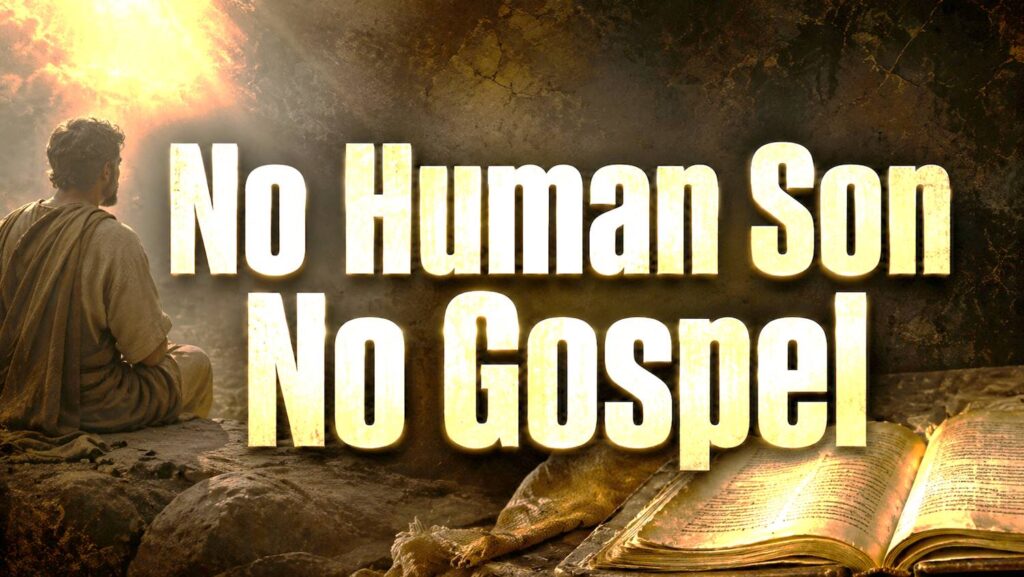
The real humanity of the Son of God is essential to the Gospel.
Hebrews 4:15 says that the Son, our high priest, understands every human weakness because he was “tempted in all ways as we are, yet without sin.”
The Son of God lived his entire human life under the same circumstances that assail every other human person. He was not pretending to be human. He was truly human.
Paul explains to Timothy:
For there is one God and one mediator between that one God and humanity, Messiah Jesus, who is himself human. He gave himself as a ransom for all, a testimony at the appointed time. To this I was appointed a herald and Apostle — I am telling the truth; I am not lying — and a teacher of the Gentiles in faith and truth. (1Tim 2:5-7)
Similarly in 2 Timothy 2:
8 Remember Jesus Messiah, resurrected from the dead, a biological descendant of David according to my Gospel. 9 For this Gospel I am suffering to the point of being a criminal in chains, but the Gospel-word of God is not chained up! 10 So I am enduring everything for the sake of the chosen ones, that they too may gain salvation in Messiah Jesus with its glory of the Coming Age. 11 This saying is trustworthy: If we died with him, we will also live with him. 12 If we endure, we will reign as kings with him. If we renounce him, he will renounce us. 13 If we are unfaithful he remains faithful, because he cannot deny himself.
At one point, Jesus himself felt such fear and dread that he pleaded with his God:
“My Father, if it is possible, let this cup pass from me; yet not as I will, but as You will” (Matt. 26:39).
Matthew tells us that Jesus prayed this not once, not twice, but three different times (Matt. 26:39, 42, 44).
Mark also records this event, saying that Jesus “began to be very distressed and troubled” (Mark 14:33).
And then, with his last breath, while dying a torturous death on the cross, Jesus cried out:
“My God, My God, why have You forsaken Me?” (Matt. 27:46; Ps. 22:1).
While it is certainly true that this fulfilled Scripture, he also said it because he truly felt the horror of that moment. He felt stranded, abandoned, deserted — perhaps even forsaken — by his God and Father.
Wouldn’t you?
This is why the passion of our Christ matters to his overall Gospel message about the coming Kingdom of God on earth. He did not minister, suffer, or overcome the grave as someone merely pretending to be human. He overcame as God’s faithful, uniquely procreated human Son, trusting his Father through agony, fear, temptation, and death.
This self-awareness explains why, throughout the Gospels, especially in John, Jesus continually says things like:
“The Son is not able to do anything from himself” (John 5:19).
And again:
“I am not able to do anything from myself” (John 5:30).
Jesus knew that his life, authority, words, works, and resurrection hope all depended entirely on the one God, his Father. As he says:
“Just as the Father has life in Himself, so He gave to the Son also to have life in himself” (John 5:26).
And again:
“Just as the living Father sent me, and I live because of the Father, so the one who feeds on me will live because of me” (John 6:57).
That is not the language of a co-equal, eternal “God the Son.” It is the language of the perfectly obedient human Son who lives because of the Father, serves the Father, prays to the Father, obeys the Father, and depends on the Father for everything.
And this is precisely why the Son is the model for all humanity — and why God dressed up as a man can never be.
The human Son overcame, not by pretending to be found in the human condition, but by actually being a human person who faithfully overcame without sin. As a result, he is able to help us overcome too. As Hebrews says:
“Because he himself suffered when tempted, he is able to help those who are tempted” (Heb. 2:18).
So when we feel weak, afraid, abandoned, or overwhelmed, we do not have a distant high priest who cannot understand us. We have the risen human Son — the man approved by God, exalted by God, and seated at God’s right hand — who knows exactly what human weakness feels like because he was, in fact, one of us!
Paul says:
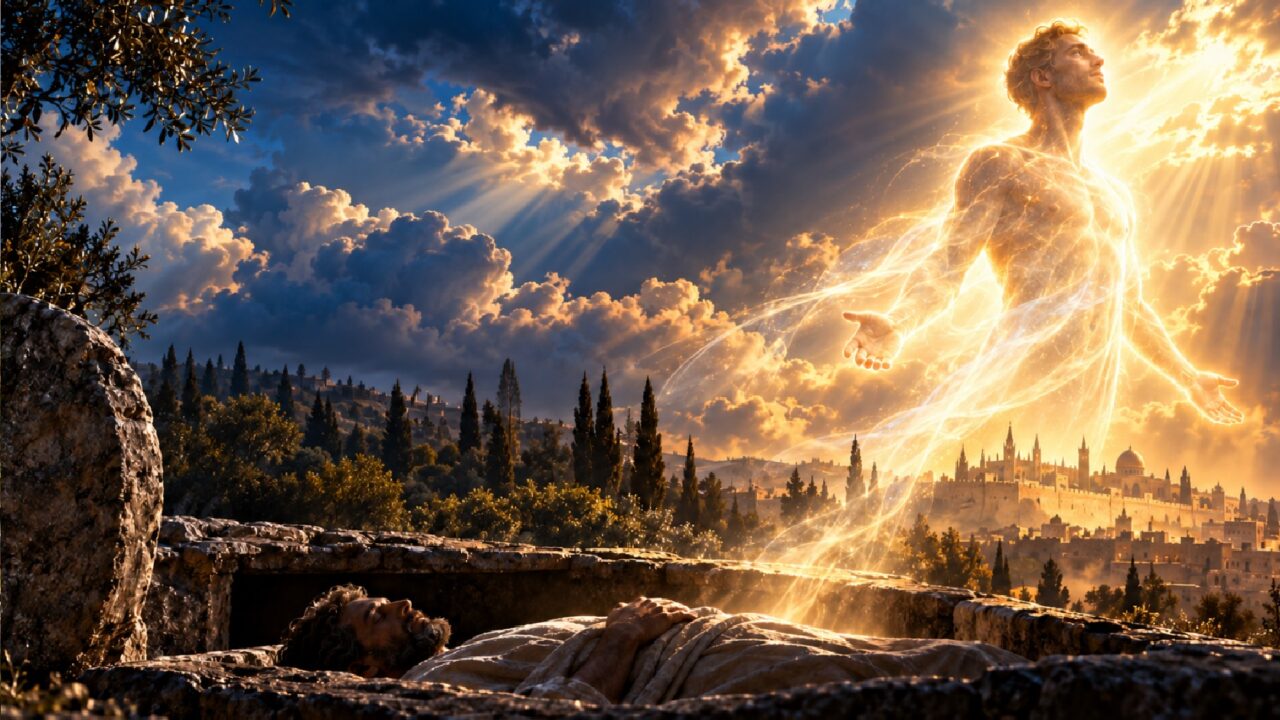
But now Messiah has been raised from the dead, the first fruits of those who have fallen asleep in death. For since death came through a human person, the resurrection of the dead also comes through a human person. For just as in Adam all die, so in the Messiah all will be made alive. (1Cor 15:20-22)

Signature: YLnQvfddA2MpNbRD5eQ6rDm65YEl/n6q8Gt96f/bJ8VtPGewgxlxjb6Zg1AmwmNGs2XFSBBKedheDop43SyiV0Ev/kXIuXJ0qdxgfRkRqJqE8dzr1o0sIqvqjtTKi3/CO5lJLXye1eD0uH4Uaz75R4e5omhEpD716ZGGmxqUEsTiIYp5frNuVPIs13wwezvQDf1dL6s3vFE9tOD2EwFMWlH2PfwpVNJ2WDPTJiCWoPs92OZ8ndCk1YbQs+a5xYQm/Cb1IRJB/9xxKcMvbrikqns7yK9ki7DmUxwOrMxDA1TzQqu6eKCq9dMAzCyyaimKXN6vDPA2QTSQSHcs2/XzD24gheKgmbbq5/lCmUf1RWBL1xtL71kYB+JXPlroLzvx4aysGOg1rd4/I4liBNjVIfhrmMKX1TeSK3nDJGqHw4cS+l7vSGzRkA9Qf+Mx8Ql1XwonDFYpaYz5M5ZdYy/j7Hb9iLQuqNLycln1UUQV27QLgkrsKnPnhgFO9X18Zbohbq4T5mt7IEgE9nfe5HEEX7ABx9QW5+c37Gb+tg+/1CZ4cx51nbLiZduq9q7NqKUtX9ypyg2Ci2FZvx8qQULni99LwpB2vcnzta8Dg3AyRYFm986mQbZRmw8YESg+f+12dMb7Nj5BaUe9YmPRTbmatiX7IbjXJzaz1HdMblGtxJwt9/eg8IC7riANPVpzdrKssQH67X/dvrzfPPKO8ZAjzBB0d6sTKZu7UnauBWWqfHEmfRWjeeWcIbZqtY0Kf9G64uWjPGaMGu5wF09EWZ9T5WiZKtwykW9Jld/H/lH2XJqoeDrGpe9tNIIS3dXWB9Xq/8a26h1fzWaRgCIiCaw6kArCvSuhZVfJHdMRgT1zacKyIOb37NYcsGzlFDKjsaW0D51opdJPmssaIywaDn/tmnuIJITlav8EVr5rL5zsoxeFlJX4wN0DRcc8Ghsq8gct

Signature: YLnQvfddA2MpNbRD5eQ6rDm65YEl/n6q8Gt96f/bJ8VtPGewgxlxjb6Zg1AmwmNGs2XFSBBKedheDop43SyiV0Ev/kXIuXJ0qdxgfRkRqJqE8dzr1o0sIqvqjtTKi3/CO5lJLXye1eD0uH4Uaz75R4e5omhEpD716ZGGmxqUEsTiIYp5frNuVPIs13wwezvQDf1dL6s3vFE9tOD2EwFMWlH2PfwpVNJ2WDPTJiCWoPs92OZ8ndCk1YbQs+a5xYQm/Cb1IRJB/9xxKcMvbrikqns7yK9ki7DmUxwOrMxDA1TzQqu6eKCq9dMAzCyyaimKXN6vDPA2QTSQSHcs2/XzD24gheKgmbbq5/lCmUf1RWBL1xtL71kYB+JXPlroLzvx4aysGOg1rd4/I4liBNjVIfhrmMKX1TeSK3nDJGqHw4cS+l7vSGzRkA9Qf+Mx8Ql1XwonDFYpaYz5M5ZdYy/j7Hb9iLQuqNLycln1UUQV27QLgkrsKnPnhgFO9X18Zbohbq4T5mt7IEgE9nfe5HEEX7ABx9QW5+c37Gb+tg+/1CZ4cx51nbLiZduq9q7NqKUtX9ypyg2Ci2FZvx8qQULni99LwpB2vcnzta8Dg3AyRYFm986mQbZRmw8YESg+f+12dMb7Nj5BaUe9YmPRTbmatiX7IbjXJzaz1HdMblGtxJwt9/eg8IC7riANPVpzdrKssQH67X/dvrzfPPKO8ZAjzBB0d6sTKZu7UnauBWWqfHEmfRWjeeWcIbZqtY0Kf9G64uWjPGaMGu5wF09EWZ9T5WiZKtwykW9Jld/H/lH2XJqoeDrGpe9tNIIS3dXWB9Xq/8a26h1fzWaRgCIiCaw6kArCvSuhZVfJHdMRgT1zacKyIOb37NYcsGzlFDKjsaW0D51opdJPmssaIywaDn/tmnuIJITlav8EVr5rL5zsoxeFlJX4wN0DRcc8Ghsq8gct


Signature: YLnQvfddA2MpNbRD5eQ6rDm65YEl/n6q8Gt96f/bJ8VtPGewgxlxjb6Zg1AmwmNGs2XFSBBKedheDop43SyiV0Ev/kXIuXJ0qdxgfRkRqJqE8dzr1o0sIqvqjtTKi3/CO5lJLXye1eD0uH4Uaz75R4e5omhEpD716ZGGmxqUEsTiIYp5frNuVPIs13wwezvQDf1dL6s3vFE9tOD2EwFMWlH2PfwpVNJ2WDPTJiCWoPs92OZ8ndCk1YbQs+a5xYQm/Cb1IRJB/9xxKcMvbrikqns7yK9ki7DmUxwOrMxDA1TzQqu6eKCq9dMAzCyyaimKXN6vDPA2QTSQSHcs2/XzD24gheKgmbbq5/lCmUf1RWBL1xtL71kYB+JXPlroLzvx4aysGOg1rd4/I4liBNjVIfhrmMKX1TeSK3nDJGqHw4cS+l7vSGzRkA9Qf+Mx8Ql1XwonDFYpaYz5M5ZdYy/j7Hb9iLQuqNLycln1UUQV27QLgkrsKnPnhgFO9X18Zbohbq4T5mt7IEgE9nfe5HEEX7ABx9QW5+c37Gb+tg+/1CZ4cx51nbLiZduq9q7NqKUtX9ypyg2Ci2FZvx8qQULni99LwpB2vcnzta8Dg3AyRYFm986mQbZRmw8YESg+f+12dMb7Nj5BaUe9YmPRTbmatiX7IbjXJzaz1HdMblGtxJwt9/eg8IC7riANPVpzdrKssQH67X/dvrzfPPKO8ZAjzBB0d6sTKZu7UnauBWWqfHEmfRWjeeWcIbZqtY0Kf9G64uWjPGaMGu5wF09EWZ9T5WiZKtwykW9Jld/H/lH2XJqoeDrGpe9tNIIS3dXWB9Xq/8a26h1fzWaRgCIiCaw6kArCvSuhZVfJHdMRgT1zacKyIOb37NYcsGzlFDKjsaW0D51opdJPmssaIywaDn/tmnuIJITlav8EVr5rL5zsoxeFlJX4wN0DRcc8Ghsq8gct