
“Death for the Christian is the doorway to Heaven’s glory….for it is merely a gateway to eternal life beyond the grave.” Billy Graham
“Focus on the Mission: reviving America; making heaven crowded.” Charlie Kirk
In Scripture, death is the great enemy, the worst of all tragedies. Death is not a doorway to escape into a fuller, more vibrant life somewhere else. It is the end of all life, meaning no consciousness in the silence of the grave—until God raises the dead.
The popular teaching of an “immortal soul” or “dualism” changes this fundamental biblical truth. It seductively, insidiously turns death into a transition period, a kind of half-way house rather than no house at all. It is simply a lie that tells us when we “die,” we do not really die at all. And in doing so, it completely destroys the great Jewish-Christian hope of resurrection when Jesus comes back.
From Genesis we are told that a human is a soul—a living, breathing person (Genesis 2:7). There is no immortal, ghost-like “you” inside the body. The “soul” is the whole living person. When the breath of life from God animates the dust, a living soul exists. When the breath departs and the body returns to dust, that soul—the person—dies. This is why Scripture describes death so starkly:
“For the living know they will die, but the dead do not know anything…also their love, their hate, and their zeal have already perished…” (Ecclesiastes 9:5–6)
“Whatever your hand finds to do, do it with all your might, for there is no work or thinking or knowledge or wisdom in Sheol where you are going.” (Ecclesiastes 9:10)
The dead don’t “relocate” or “go somewhere else”; they simply do not know anything. Their emotions, plans, and activities have ceased. Psalm 146:4 speaks the same way:
“His spirit departs, he returns to the earth; in that very day his plans perish.”
The whole Bible assumes this: human beings are mortal; when they die, they are no longer alive in any way or shape. Because of that, when God warned Adam, He did not threaten a change of address but death:
“But from the tree of the knowledge of good and evil you shall not eat, for in the day that you eat from it you will surely die.” (Genesis 2:17)
The serpent directly contradicted this:
“You surely will not die!” (Genesis 3:4)
That lie echoes down through history. Whenever we are told that even though the body dies, the “real you” does not really die—that you simply go on living elsewhere—we are hearing, in new clothes, the serpent’s ancient denial of God’s word. As a result, Paul calls death “the last enemy” (1 Corinthians 15:26). An enemy is not a friend or a promotion. It is something that destroys us. The “wages of sin” are not “going to another place,” but “death, but the gift of God is the life of the age to come in Messiah Jesus our Lord.” (Romans 6:23) If your soul is truly immortal, death ceases to be real death and by default you don’t really have an enemy but a friend.
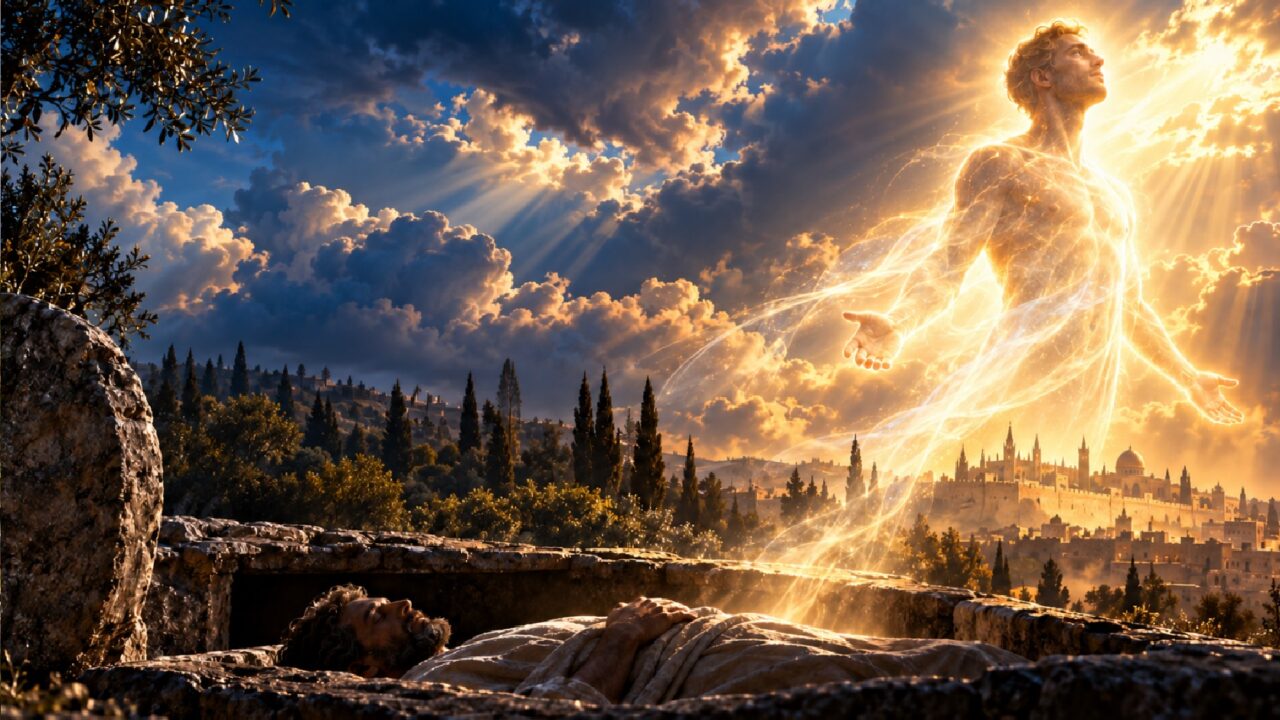
Death becomes a kind of tunnel to another conscious glory or conscious torment. There is no real sting of death; that is, the seriousness of sin is done away with. But Scripture says death is the most terrible of things because it truly ends you, totally, irreversibly—unless God resurrects you. Because the dead are truly dead, the Bible can speak of death as “sleep”—not because they are secretly awake in heaven, but because they will one day be woken by resurrection. When Lazarus died, Jesus said:
“Our friend Lazarus has fallen asleep; but I am going so that I may awaken him from sleep…Then Jesus told them plainly, ‘Lazarus died.’” (John 11:11,14)
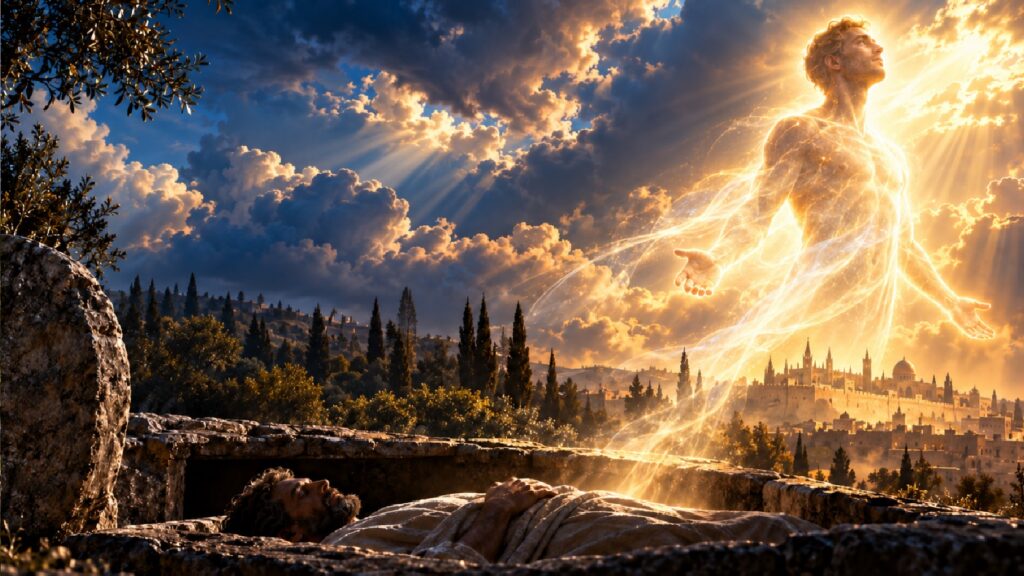
Lazarus was not awake or conscious in another place. He was dead, and Jesus “awakened” him by restoring him to life. The same pattern holds for all the righteous dead. Daniel was given a vision of a time when “many of those who sleep in the dust of the ground will awake,” (Daniel 12:2a).
Jesus affirms it:
“Do not marvel at this, because an hour is coming in which all who are in the tombs will hear his voice, and will come out” (John 5:28–29a).
Notice where the dead are: in the tombs, graves, in the dust of the earth, not in heaven or some “hell” tormented for eternity. The dead will be raised at a definite time in the future, when the Messiah comes in glory. Jesus anchors our hope in that coming day:
“This is the will of the One who sent me, that I should lose nothing of all that He has given me, but raise it up on the last day…Everyone who looks on the Son and believes in him may have the life of the age to come, and I will raise him up on the last day.” (John 6:39–40)
If believers are already alive and with Jesus in conscious joy immediately after death, what sense does it make to speak of being raised “on the last day”? Why does Scripture persistently talk about a great resurrection hope if that will already have happened after death? The consistent biblical picture is this:
- We die;
- We sleep in the dust;
- When Jesus comes again, we will be raised from “the sleep of death.”
The teaching of an immortal soul sneaks in the idea that every human already has, by nature, something death cannot touch. But Scripture reserves that kind of immortality for God alone:
“He who is the blessed and only Sovereign, the King of kings and Lord of lords, who alone has immortality, dwelling in unapproachable light…” (1 Timothy 6:15–16)
And even the Son himself says he is dependent on God the Father for his own existence (John 5:26; 6:57).
We are not immortal souls trapped in mortal bodies. We are mortal beings who must receive immortality as a gift in the resurrection, as Paul insists:
“For this perishable body must put on the imperishable, and this mortal body must put on immortality. When this perishable will have put on the imperishable, and this mortal will have put on immortality, then will happen the saying that is written: “Death has been swallowed up by victory.’” (1 Corinthians 15:53–54)
We do not “put on immortality” at the moment of death. We put it on when the dead are raised and Messiah’s victory over death is fully made possible for us too.
The immortal soul theory also distorts the gospel of the Kingdom. If believers fly off at death to live forever in heaven as disembodied souls, then the coming back of Jesus, the resurrection of the dead, and the coming Kingdom on earth become, at best, unnecessary. But Jesus’ message was not, “You will go to heaven when you die.” His good news was:
“Blessed are the lowly, for they will inherit the earth.” (Matthew 5:5)
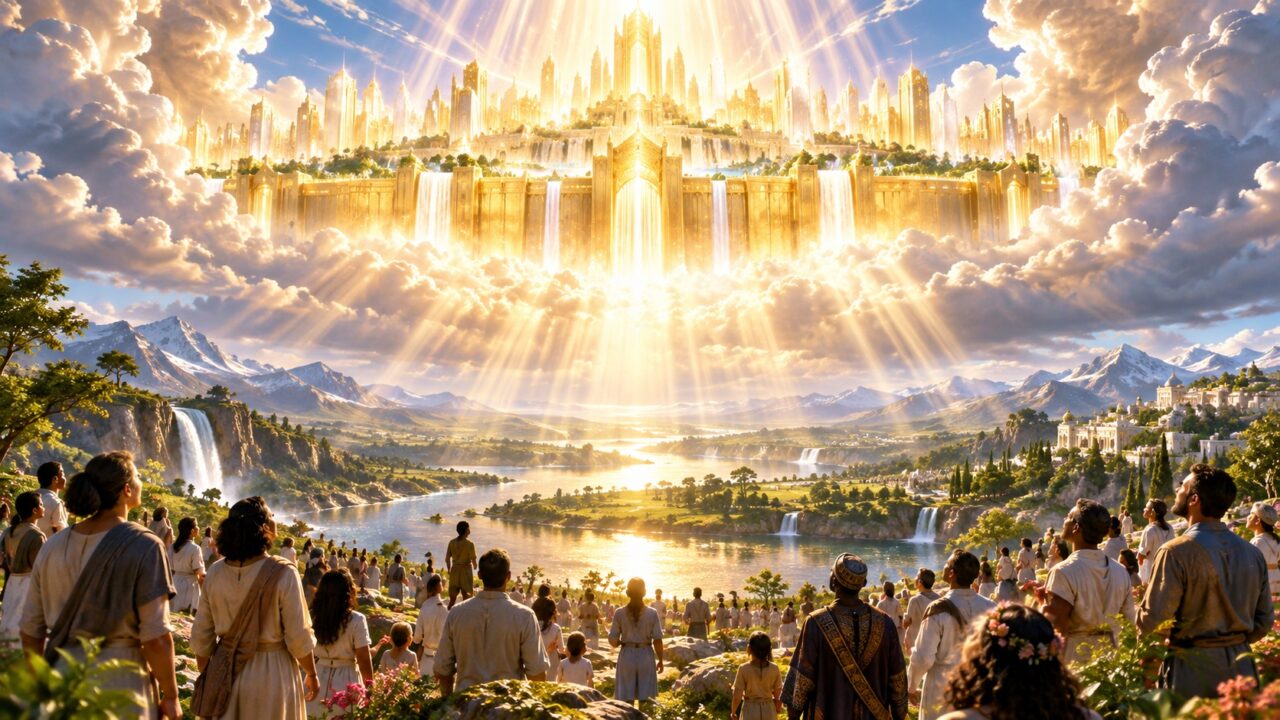
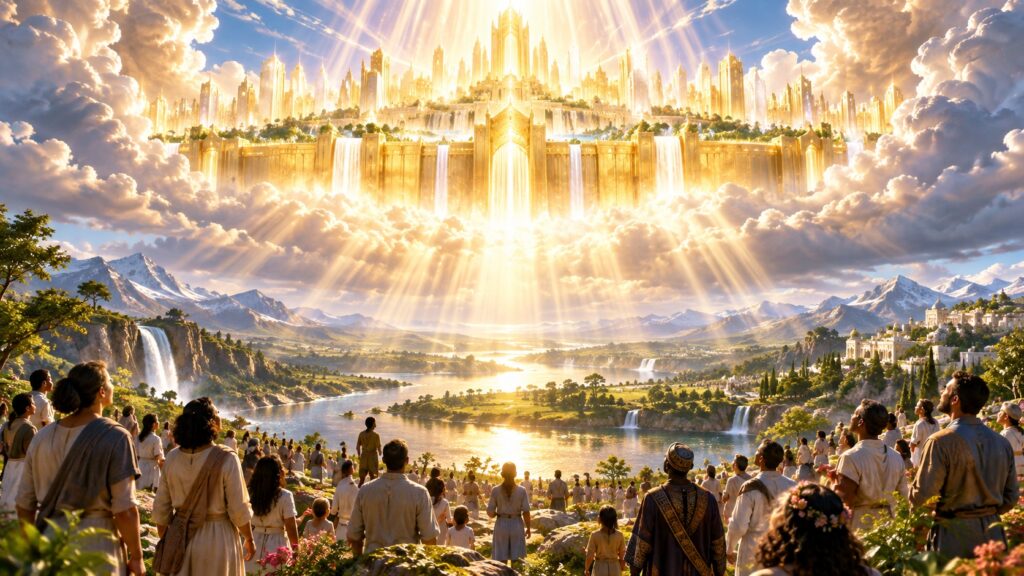
And the “End Game” for all of biblical prophecy is not souls escaping the earth but the Kingdom of God coming to the earth so we can all continue to live here:
“The kingdom of the world has become the kingdom of our Lord and of His Christ; and He will reign forever and ever…The time came for the dead to be judged, and to reward Your slaves the prophets and the saints…” (Revelation 11:15,18)
The resurrection, the judgment, and the Kingdom arrive together when Jesus comes back. That is when the saints are rewarded with immortal life in new, glorified bodies. Until then, we all have to “sleep the sleep of death.” If death is not real death, then:
- Sin no longer truly brings death, only a change of location.
- Death is not a fearful enemy but the best of all your friends.
- The resurrection ceases to be our one and only hope beyond death.
As a result, you have replaced the gospel of the prophets, Jesus, and the Apostles with “another gospel.” Death is indeed terrible—precisely because, for the Bible, you are not alive in any way, shape, or form when you are dead. And that is exactly why the gospel of the Kingdom and the resurrection of the dead is the good news.
Our future does not depend on an immortal soul already within us, but on the faithfulness of the one true God, Yahweh, who will one day call all who sleep in the dust to wake up and live again through His human Messiah, Jesus.
Remember how Scripture forces us back to this simple, sobering, yet glorious truth: We are “but dust and ashes”; therefore, we die.
- “All of us have to go to one place. All are from the dust, and all return to the dust.” (Ecclesiastes 3:20)
- “The soul who sins will die.” (Ezekiel 18:4,20)
The dead are not alive anywhere.
- “The dead do not praise Yah, nor do any who go down into silence.” (Psalm 115:17)
There is no thought, no awareness in Sheol, the place of graves. Our only hope is the God who raises the dead by His Son. This is the one and only great Christian hope.
- Paul says that his hardships taught him not to trust in himself “but in God who raises the dead.” (2 Corinthians 1:9)
That resurrection comes when Jesus comes back to establish the Kingdom.
“For the Lord himself will descend from heaven with a shout, with the voice of an archangel and with the trumpet of God, and the dead in Messiah will rise first.” (1 Thessalonians 4:16)

Signature: YLnQvfddA2MpNbRD5eQ6rDm65YEl/n6q8Gt96f/bJ8VtPGewgxlxjb6Zg1AmwmNGs2XFSBBKedheDop43SyiV0Ev/kXIuXJ0qdxgfRkRqJqE8dzr1o0sIqvqjtTKi3/CO5lJLXye1eD0uH4Uaz75R4e5omhEpD716ZGGmxqUEsTiIYp5frNuVPIs13wwezvQDf1dL6s3vFE9tOD2EwFMWlH2PfwpVNJ2WDPTJiCWoPs92OZ8ndCk1YbQs+a5xYQm/Cb1IRJB/9xxKcMvbrikqns7yK9ki7DmUxwOrMxDA1TzQqu6eKCq9dMAzCyyaimKXN6vDPA2QTSQSHcs2/XzD24gheKgmbbq5/lCmUf1RWBL1xtL71kYB+JXPlroLzvx4aysGOg1rd4/I4liBNjVIfhrmMKX1TeSK3nDJGqHw4cS+l7vSGzRkA9Qf+Mx8Ql1XwonDFYpaYz5M5ZdYy/j7Hb9iLQuqNLycln1UUQV27QLgkrsKnPnhgFO9X18Zbohbq4T5mt7IEgE9nfe5HEEX7ABx9QW5+c37Gb+tg+/1CZ4cx51nbLiZduq9q7NqKUtX9ypyg2Ci2FZvx8qQULni99LwpB2vcnzta8Dg3AyRYFm986mQbZRmw8YESg+f+12dMb7Nj5BaUe9YmPRTbmatiX7IbjXJzaz1HdMblGtxJwt9/eg8IC7riANPVpzdrKssQH67X/dvrzfPPKO8ZAjzBB0d6sTKZu7UnauBWWqfHEmfRWjeeWcIbZqtY0Kf9G64uWjPGaMGu5wF09EWZ9T5WiZKtwykW9Jld/H/lH2XJqoeDrGpe9tNIIS3dXWB9Xq/8a26h1fzWaRgCIiCaw6kArCvSuhZVfJHdMRgT1zacKyIOb37NYcsGzlFDKjsaW0D51opdJPmssaIywaDn/tmnuIJITlav8EVr5rL5zsoxeFlJX4wN0DRcc8Ghsq8gct
Signature: YLnQvfddA2MpNbRD5eQ6rDm65YEl/n6q8Gt96f/bJ8VtPGewgxlxjb6Zg1AmwmNGs2XFSBBKedheDop43SyiV0Ev/kXIuXJ0qdxgfRkRqJqE8dzr1o0sIqvqjtTKi3/CO5lJLXye1eD0uH4Uaz75R4e5omhEpD716ZGGmxqUEsTiIYp5frNuVPIs13wwezvQDf1dL6s3vFE9tOD2EwFMWlH2PfwpVNJ2WDPTJiCWoPs92OZ8ndCk1YbQs+a5xYQm/Cb1IRJB/9xxKcMvbrikqns7yK9ki7DmUxwOrMxDA1TzQqu6eKCq9dMAzCyyaimKXN6vDPA2QTSQSHcs2/XzD24gheKgmbbq5/lCmUf1RWBL1xtL71kYB+JXPlroLzvx4aysGOg1rd4/I4liBNjVIfhrmMKX1TeSK3nDJGqHw4cS+l7vSGzRkA9Qf+Mx8Ql1XwonDFYpaYz5M5ZdYy/j7Hb9iLQuqNLycln1UUQV27QLgkrsKnPnhgFO9X18Zbohbq4T5mt7IEgE9nfe5HEEX7ABx9QW5+c37Gb+tg+/1CZ4cx51nbLiZduq9q7NqKUtX9ypyg2Ci2FZvx8qQULni99LwpB2vcnzta8Dg3AyRYFm986mQbZRmw8YESg+f+12dMb7Nj5BaUe9YmPRTbmatiX7IbjXJzaz1HdMblGtxJwt9/eg8IC7riANPVpzdrKssQH67X/dvrzfPPKO8ZAjzBB0d6sTKZu7UnauBWWqfHEmfRWjeeWcIbZqtY0Kf9G64uWjPGaMGu5wF09EWZ9T5WiZKtwykW9Jld/H/lH2XJqoeDrGpe9tNIIS3dXWB9Xq/8a26h1fzWaRgCIiCaw6kArCvSuhZVfJHdMRgT1zacKyIOb37NYcsGzlFDKjsaW0D51opdJPmssaIywaDn/tmnuIJITlav8EVr5rL5zsoxeFlJX4wN0DRcc8Ghsq8gct
Signature: YLnQvfddA2MpNbRD5eQ6rDm65YEl/n6q8Gt96f/bJ8VtPGewgxlxjb6Zg1AmwmNGs2XFSBBKedheDop43SyiV0Ev/kXIuXJ0qdxgfRkRqJqE8dzr1o0sIqvqjtTKi3/CO5lJLXye1eD0uH4Uaz75R4e5omhEpD716ZGGmxqUEsTiIYp5frNuVPIs13wwezvQDf1dL6s3vFE9tOD2EwFMWlH2PfwpVNJ2WDPTJiCWoPs92OZ8ndCk1YbQs+a5xYQm/Cb1IRJB/9xxKcMvbrikqns7yK9ki7DmUxwOrMxDA1TzQqu6eKCq9dMAzCyyaimKXN6vDPA2QTSQSHcs2/XzD24gheKgmbbq5/lCmUf1RWBL1xtL71kYB+JXPlroLzvx4aysGOg1rd4/I4liBNjVIfhrmMKX1TeSK3nDJGqHw4cS+l7vSGzRkA9Qf+Mx8Ql1XwonDFYpaYz5M5ZdYy/j7Hb9iLQuqNLycln1UUQV27QLgkrsKnPnhgFO9X18Zbohbq4T5mt7IEgE9nfe5HEEX7ABx9QW5+c37Gb+tg+/1CZ4cx51nbLiZduq9q7NqKUtX9ypyg2Ci2FZvx8qQULni99LwpB2vcnzta8Dg3AyRYFm986mQbZRmw8YESg+f+12dMb7Nj5BaUe9YmPRTbmatiX7IbjXJzaz1HdMblGtxJwt9/eg8IC7riANPVpzdrKssQH67X/dvrzfPPKO8ZAjzBB0d6sTKZu7UnauBWWqfHEmfRWjeeWcIbZqtY0Kf9G64uWjPGaMGu5wF09EWZ9T5WiZKtwykW9Jld/H/lH2XJqoeDrGpe9tNIIS3dXWB9Xq/8a26h1fzWaRgCIiCaw6kArCvSuhZVfJHdMRgT1zacKyIOb37NYcsGzlFDKjsaW0D51opdJPmssaIywaDn/tmnuIJITlav8EVr5rL5zsoxeFlJX4wN0DRcc8Ghsq8gct